You should always grind a tree stump rather than leaving it in place. A decaying tree stump acts as a breeding ground for destructive eastern subterranean termites and root-rot fungi like Armillaria, while permanently depleting surrounding soil of nitrogen and creating sunken settlement sinkholes across your lawn.
Stump Grinding vs. Leaving It to Decay: The Direct Comparison
Leaving a stump to rot naturally takes 7 to 15 years in Missouri’s humid climate. During that decade, the underground wood invites pests and destabilizes lawn grades.
| Factor | Professional Stump Grinding (6–12″ Below Grade) | Leaving the Stump in Place |
| Subterranean Termite Risk | Eliminated: Destroys above-ground wood food source. | High: Establishes foraging colonies within 30 feet of foundations. |
| Carpenter Ant Colonization | None; wood bulk is shattered into mulch. | Severe risk as softwood core decays and softens. |
| Fungal Spread (Armillaria) | Halted; halts underground mycelial pathogen spread. | Spreads via interconnected root systems to nearby healthy trees. |
| Soil Nitrogen Balance | High initial carbon spike, stabilized with nitrogen feed. | Localized nitrogen lockup for 5 to 10+ years around the stump. |
| Lawn Settlement & Mowing | Flat, grade-level fill; ready for seed/sod in 2 to 4 weeks. | Permanent mower hazard, tripping liability, and sudden ground cave-ins. |
| Sprouting / Sucker Regrowth | Prevented; severed root flare stops photosynthetic feed. | Persistent root sprouts require weekly trimming or systemic herbicides. |
3 Core Soil & Structural Dangers of Abandoned Stumps
1. Subterranean Termite Harborages
Missouri is in a moderate-to-heavy termite infestation probability zone. The eastern subterranean termite (Reticulitermes flavipes) relies on soil moisture and decaying cellulose to survive.
- A dead stump anchored in damp, poorly drained Missouri clay is an ideal primary food base.
- Subterranean termites construct subterranean mud foraging tunnels radiating 50 to 100 feet from the host stump.
- Stumps left within 30 feet of a residential foundation bridge the gap directly into basement sill plates, rim joists, and wall studs.
2. The Spread of Armillaria Root Rot
Armillaria (commonly known as the honey mushroom) is a native, aggressive fungal pathogen across Jackson and Cass Counties.
- When an infected hardwood—such as an oak or maple—is cut down and left intact, Armillaria colonizes the entire dead root flare.
- The fungus travels underground via black fungal cords (rhizomorphs), crossing soil barriers to infect and choke the root systems of adjoining live trees, foundation shrubs, and ornamental plantings.
- Grinding the stump down 8 to 12 inches below ground line fractures the crown, accelerating natural desiccation and disrupting the fungal life cycle.
3. Soil Nitrogen Depletion (The Carbon Trap)
As soil microbes break down heavy, unground hardwood logs, they consume massive quantities of environmental nitrogen to process the cellulose.
- Leaving a dense stump to rot slowly starves surrounding topsoil of available nitrogen.
- Turfgrass, perennial plants, and sod installed near an unground stump turn yellow, display stunted root growth, and struggle to establish.
- Grinding the stump shatters the wood into shavings that can be hauled off immediately, allowing the pit to be backfilled with conditioned topsoil.
Local Municipal and Neighborhood Realities Across Our 7 Towns
Site soils, municipal disposal rules, and housing stock create unique problems when stumps are abandoned in the southeastern Kansas City metro.
1. Lee’s Summit
- Expansive Clay Sinkholes: Lee’s Summit sits on dense clay. When an unground root system decays over 8 to 10 years, soil voids form under the lawn. During heavy spring rains, the surface turf suddenly caves into a dangerous foot-deep sinkhole.
- HOA Guidelines: Planned subdivisions (like Lakewood, Raintree Lake, and Winterset) maintain strict exterior landscaping covenants. Leaving a stump sticking up in front or side yards triggers non-compliance fines.
2. Blue Springs
- Emerald Ash Borer Regrowth: Hundreds of green and white ash trees cut down across Blue Springs continue to send up vigorous epicormic suckers from live root collars. Grinding the root flare below grade cuts off photosynthetic recharge and permanently stops sucker sprouting.
3. Independence
- Aging Clay Sewer Lateral Lines: Independence features older residential neighborhoods with clay-tile sewer pipes. Stumps left near lateral connections remain hydraulically active; lateral roots stay alive for months, infiltrating and blocking underground sewer pipes.
4. Raymore
- Open Prairie Subdivisions: In Northern Cass County communities like Creekmoor, large softwoods (such as silver maples and Bradford pears) are vulnerable to wind snapping. Leaving stumps behind in wide-open lawns turns routine zero-turn mowing into an obstacle course and blunts mower blades on surface root flares.
5. Lake Lotawana
- Slope & Runoff Considerations: Stumps located along Lake Lotawana’s steep rocky grades require careful handling. Grinding must be executed without undermining retaining seawalls or fracturing shallow limestone shelves. However, leaving dead hardwood attracts wood-boring insects directly adjacent to structural dock beams and waterfront decks.
6. Raytown
- Close Foundation Setbacks: Many Raytown post-war properties feature narrow side yards where trees stood within 8 to 10 feet of foundation footings. An abandoned stump rotting against the house provides a direct termite pipeline straight into the basement framing.
7. Grandview
- Municipal Code Compliance: Grandview Municipal Code requires that public-adjacent trees taken down be cut flush to ground level or ground below grade to prevent civic trip hazards. Leaving protruding stumps along public easements invites code enforcement notices.
Stump Grinding vs. Complete Excavation: Which Do You Need?
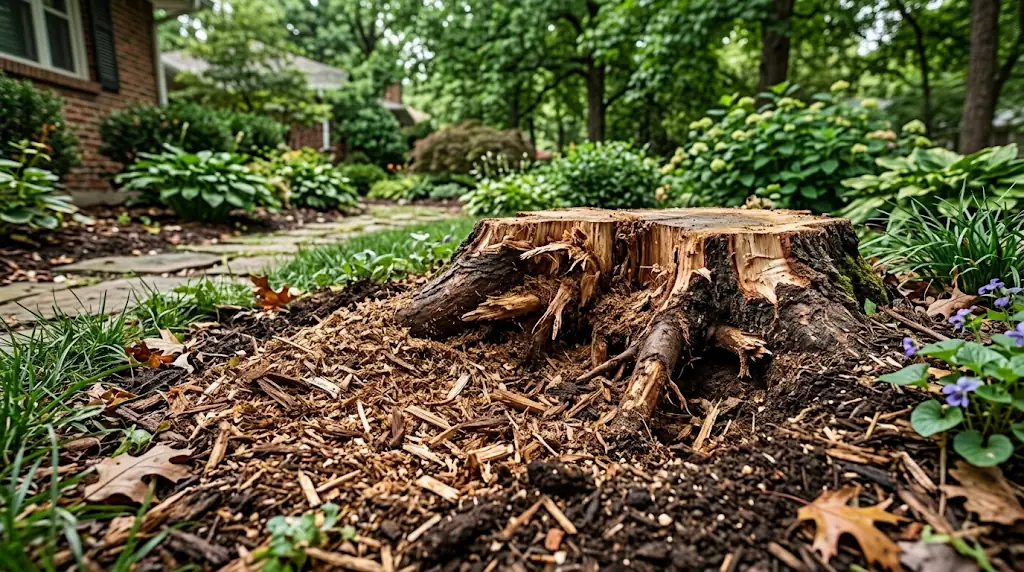
- Stump Grinding (Standard Residential Choice): A mechanical rotating carbide cutting wheel grinds the stump and main surface roots 6 to 12 inches below the surface. Roots left deep in the ground decompose harmlessly over time. This approach preserves lawn grades and creates minimal turf disturbance.
- Complete Stump Excavation (Heavy Equipment Pull): Involves an excavator or backhoe digging out the entire root ball. This method is only required if you are installing footings for an addition, pouring a concrete driveway, or planting a replacement tree in the exact same footprint. Complete excavation is significantly more invasive and expensive.
How to Prepare a Ground Stump Site for New Grass
- Rake and Remove the Wood Shavings: Do not leave pure wood chips in the hole; high carbon levels will choke out grass seed.
- Backfill with Pulverized Topsoil: Fill the depression 1 to 2 inches higher than the surrounding lawn grade to account for natural settling.
- Add High-Nitrogen Starter Fertilizer: Apply fertilizer to offset any localized nitrogen tie-up caused by remaining subsurface root fibers.
- Seed or Sod: Establish turf-type tall fescue (the hardiest lawn grass for the Kansas City climate) in early autumn or early spring.
Eliminate pest habitats, preserve your lawn equipment, and restore your yard’s grade with specialized, deep-root stump grinding. For safe, complete stump removal anywhere across Jackson and Cass Counties, contact Lee's Summit Tree Removal today through our contact page.