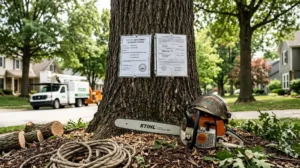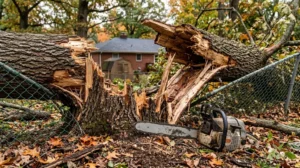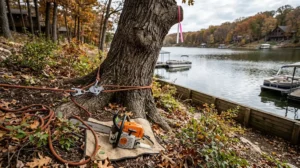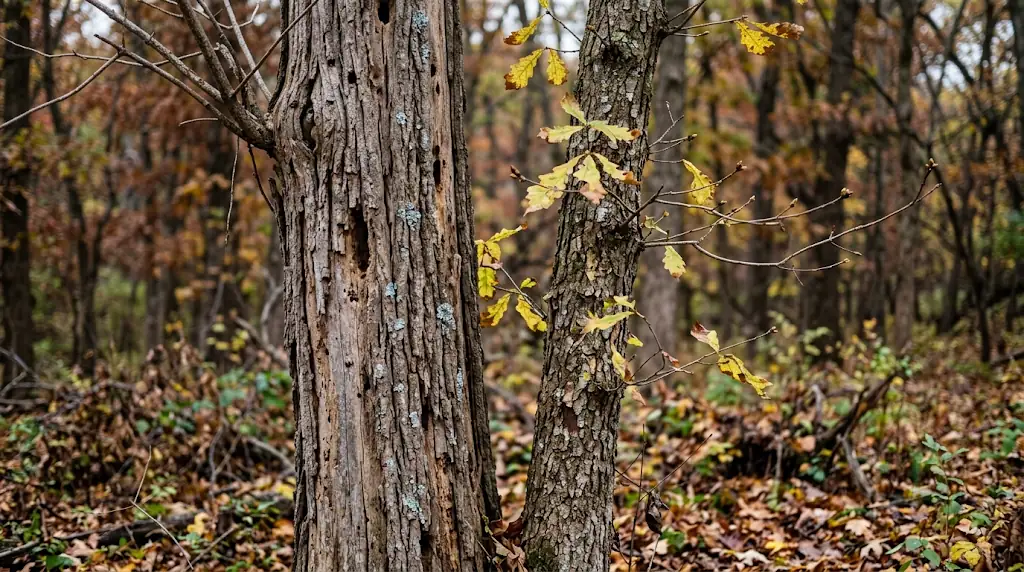
A dead tree possesses zero viable cambium tissue, brittle twigs, and decaying root anchors, requiring immediate removal before winter winds and ice loads cause sudden structural failure. A dying tree retains partial vascular flow and live canopy sections, meaning it can sometimes be pruned, treated, or cabled depending on trunk integrity and species vulnerability.
Dead vs. Dying vs. Structurally Unsound Trees
Misjudging tree health before winter ice storms hit Jackson and Cass Counties exposes homes, parked cars, and utility lines to severe structural impacts.
| Diagnostic Marker | Healthy Tree | Dying Tree (Potentially Salvageable) | Dead / Immediate Hazard Tree |
| Twigs & Buds | Flexible twigs; moist, fleshy green under-bark; plump dormant buds. | Brittle upper tips; dry buds on select branches; sparse green inner bark. | Completely snap dry; dry brown or gray beneath bark across all scaffolds. |
| Bark & Trunk Integrity | Firm, uniform bark with natural furrows; no hollow sound. | Localized cracks, localized sap weeping, or patchy peeling bark. | Sloughing sheets of bark, vertical trunk fissures, fungal conks/brackets. |
| Crown Canopy | Full, balanced foliage; seasonal leaf drop with normal bud set. | Thinning crown, early autumn defoliation, “stagheading” (dead upper tips). | Over 50% dead scaffold limbs; retained brown leaves that failed to drop naturally. |
| Root Plate | Level ground plate; no mounding, cracking, or fungal growth. | Minor surface root damage or slight root exposure without ground heave. | Uplifted soil mounds; snapped anchor roots; fungal brackets (mushrooms) at the root collar. |
| Action Plan | Routine maintenance pruning. | Arborist assessment, canopy thinning, pest/disease treatment. | Immediate mechanical removal before winter weather. |
5 Field Tests to Diagnose Tree Vitality
Perform these quick structural tests during autumn before freezing temperatures set in:
- The Scratch Test (Cambium Check): Use a pocketknife or thumbnail to scrape away the top layer of bark on several pencil-thick outer twigs. Bright green, moist tissue indicates an active cambium layer. Dry, brown, brittle, or hollow wood confirms dead tissue.
- The Branch Flexibility Test: Bend outer branches up to a 45-degree angle. Healthy and dormant branches bend smoothly without snapping. Dead branches snap cleanly with an audible crack.
- The Trunk Sounding Test: Tap the main trunk at various heights using a rubber mallet. A solid, deep thud indicates dense, sound heartwood. A hollow, drum-like ring or dull papery sound signals internal wood decay and structural cavities.
- The Root Flare Inspection: Clear away mulch, leaf piles, and soil right at the base of the trunk. The presence of shelf mushrooms (conks) or honey mushrooms (Armillaria) at the base proves advanced root rot, destroying the tree’s mechanical grip on the ground.
- The Lean & Soil Heave Check: A tree that grew with a natural curve is rarely an immediate hazard. However, a straight tree that has suddenly tilted—accompanied by cracked, mounded soil or exposed root tips on the opposite side—indicates an active root plate failure.
Regional Threat: Emerald Ash Borer Across Jackson and Cass Counties
Green and white ash trees represent the single highest tree failure risk across Lee’s Summit, Raymore, and Grandview.
- The Problem: The invasive Emerald Ash Borer (EAB) feeds on the vascular phloem layer beneath the bark. Once the canopy displays more than 30% dieback, the tree is functionally dead.
- The Winter Hazard: Ash wood infested with EAB dries out rapidly, losing all internal structural elasticity. Unlike oaks or maples that bend under ice loads, dead ash branches shatter suddenly under minimal wind or snow accumulation.
- Key EAB Identifiers:
- Distinct D-shaped exit holes (1/8-inch wide) on the trunk.
- “Bark blonding” caused by woodpeckers stripping exterior bark to reach larvae.
- Epicormic sprouting (dense clusters of small suckers shooting out around the lower trunk base).
Local Municipal Realities & Winter Hazards
Site topography, regional soils, and microclimates create distinct winter risk profiles across our service footprint.
1. Lee’s Summit
- Expansive Clay Strain: Following hot, dry late-summer months, heavy shrink-swell clays pull away from mature root balls. Late-fall rains followed by freezing temperatures create soil heaving around root plates, destabilizing mature pin oaks and maples in subdivisions like Lakewood and Raintree.
- City Right-of-Way Inspections: Lee’s Summit Code Enforcement actively tags street trees with dead limbs extending over public sidewalks to prevent pedestrian hazards during winter freezes.
2. Raymore
- Open Wind Exposure: Located in Northern Cass County, Raymore lacks the dense woodland windbreaks found further north. Fast-growing, brittle species like Bradford pears and silver maples face intense straight-line winds and freezing rain, leading to catastrophic trunk splits along weak V-crotches.
- Subdivision Standards: Planned communities like Creekmoor require prompt removal of dead structural trees to maintain neighborhood architectural standards and avoid property liability.
3. Grandview
- Sloped Lots and Runoff Paths: Neighborhoods along the Highway 71 corridor and near Truman Farm feature sloped lots with shallow topsoil over limestone shelves. Saturated winter conditions loosen root systems of aging elms and hackberries, increasing the likelihood of whole-tree uprooting.
- Municipal Code § 48-173: Grandview municipal standards empower the city to order the removal of hazardous dead timber adjacent to streets, utilities, or neighboring lots at the owner’s expense if safety notices are ignored.
4. Blue Springs, Independence, Raytown & Lake Lotawana
- Blue Springs & Raytown: High densities of unmanaged ash and post-war silver maples pose severe risks to overhead secondary utility drops.
- Independence: Independent municipal utility lines (IPL) run along narrow rear-lot easements where bucket trucks cannot reach, requiring hazardous dead trees to be disassembled manually before winter storms hit.
- Lake Lotawana: Rocky shoreline soils force lateral root plates. Freezing lake winds and heavy ice coats regularly topple shallow-rooted trees directly into docks, boat lifts, and shoreline easements.
Can a Dying Tree Be Saved Before Winter?
A dying tree can only be preserved under specific circumstances:
- The Root Collar is Intact: If trunk integrity is solid and no bracket fungi are present on the root flare, crown reduction pruning can relieve weight prior to winter snows.
- Target Insects Can Be Controlled: Green ash trees showing early-stage EAB decline (under 30% canopy dieback) can be treated with systemic trunk injections in early spring, though hazardous limbs must be pruned immediately.
- Structural Cabling is Feasible: Healthy multi-stem trees with narrow branch unions can be fitted with dynamic or static arborist cables to distribute ice loads safely.
If a tree has lost over 50% of its canopy, exhibits hollow trunks, or shows severe root degradation, it is an irrecoverable hazard. Leaving dead timber standing through a Missouri winter drastically increases the danger and cost of emergency extraction.
Before severe winter weather stresses your property, have your mature trees inspected by experienced removal professionals. Contact Lee's Summit Tree Removal today through our contact page to schedule a hazard assessment and safe winter removal.